

How does it feel to negotiate with Russian officials concerning the war in Ukraine?
This question has generated widespread curiosity in the wake of several recent sessions of peace discussions, which have so far appeared to yield minimal progress half a decade since Russia's comprehensive military offensive.
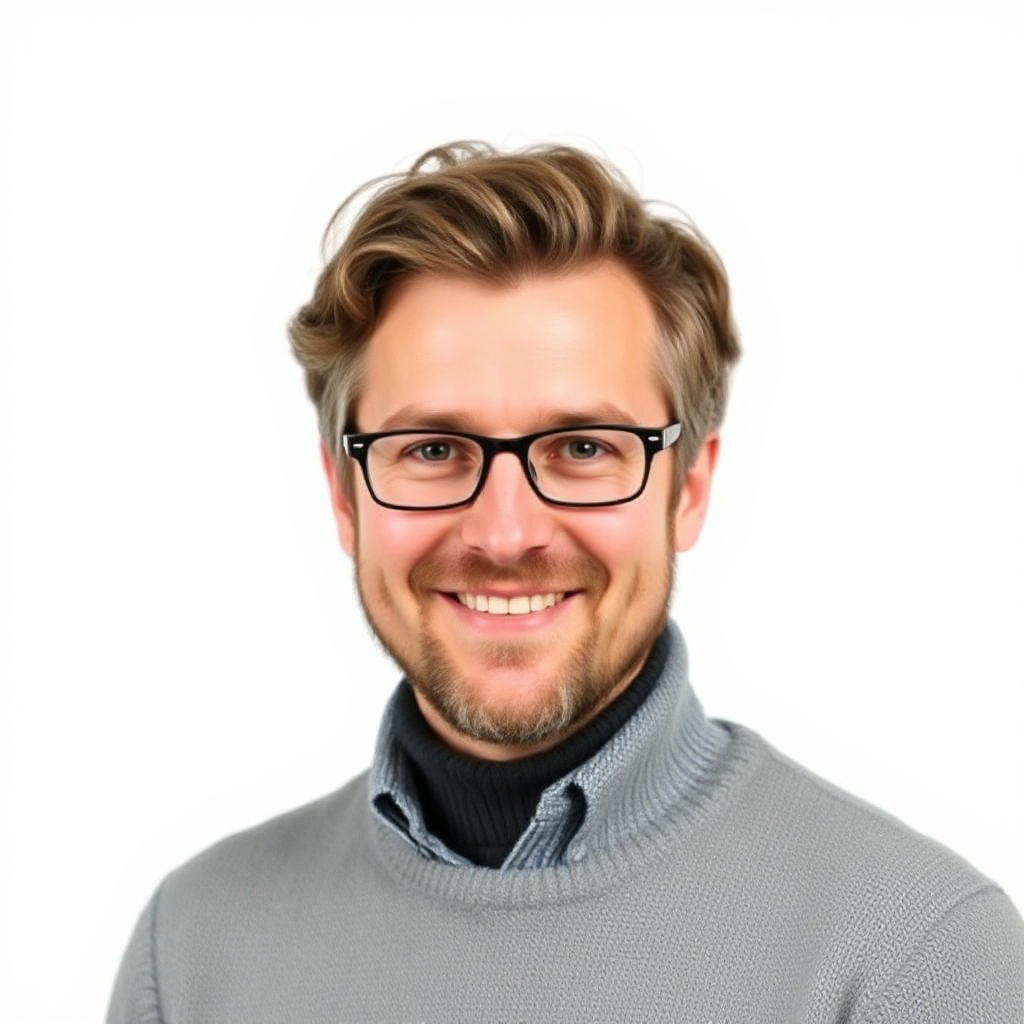
A further round of American-facilitated discussions is likely to occur in Geneva in the coming days. In preparation, a key participant of the Ukrainian leadership's negotiating team, the diplomat, who has taken part in recent direct military talks, has provided his viewpoint.
As stated by Kyslytsya, these dealings are business-like and mostly free of the type of ideological and rhetorical grandstanding observed elsewhere by Russian leadership.
"Military officials possess a superior understanding of what is going on in the combat zone," he remarked in a conversation earlier this week.
"The question remains whether they [the Russians] are capable, or not, of reporting [back] directly…without altering or changing the facts," he continued.
It is far from an easy task to try to end a war. The reality of the battlefield in the Donbas region - where tens of thousands of unmanned aerial vehicles patrol and kill over a vast so-called "grey zone" between the two sides, while two hundred thousand local civilians still reside in the "heavily fortified" cities of the Donbas - makes the practical process of disengagement extremely complicated.
"It is essential to establish a clear set of rules and procedures," the diplomat explained, "and a method to confirm and oversee."
The Role of External Parties
Much of this work, he noted, is finished, thanks in part to the close participation of US representatives, such as General Alexus Grynkewich and Dan Driscoll.
It's obviously against Kyiv's interest to disparage envoys of the current US government, but when Kyslytsya praises the US delegation for its efforts, he sounds sincere.
"We have to credit the Americans for their commitment and their perseverance," he says, "because they sit in the meetings non-stop. They don't only watch…they ask questions and they heed our responses."
The negotiator was equally complimentary about the roles played by the former president's adviser, whom he described as "not a novice", and billionaire envoy the special representative, whom he described as "a much wiser person than the caricature portrayal you see in the media".
The US, he asserted, will undertake a critical role in overseeing any future ceasefire, with resources encompassing orbital and other forms of high-tech monitoring.
"We need someone who will play the role of an arbitrator, because if there is a breach there must be a neutral actor that is solid [and] authoritative."

Previous and Present Monitoring Realities
During an eight-year period before Russia's major invasion in recent years, this oversight function was handled by the OSCE - a group whose limited resources and lack of punitive powers rendered it mostly unable of preventing an escalation.
"That was quite an achievement [for them] just to operate two drones airborne above the area," Kyslytsya said. "It resembles the Flintstones era compared to what we have today."
In comparison, latest analyses indicate that as many as twelve thousand drones are operating over the single city of Pokrovsk at any one time.
An Insider's Account on Facing the Adversary
When asked how he managed to negotiate directly from delegates from a head of state in the Kremlin who has shown readiness to expend over a million-plus of his own men to subjugate its neighbor, the diplomat, also a former UN ambassador, offered his response.
He told that he'd had years of experience.
"I witnessed much worse. I served a five-year term in at the UN, a portion before the major war. I regularly had to be present with the enemy on a frequent basis."
One evening is etched in his memory: the eve of the invasion.
In the middle of an emergency Security Council session, called to discuss the urgent crisis in the country, the diplomat got word that his country was under attack.
At the same time, seven time zones to the eastward in Kyiv, the first distant detonations signaled as the all-out assault on the nation began.
Amid scenes of agonising tension, Kyslytsya attempted to persuade his Russian counterpart, the Russian envoy, to call his superior, the Russian foreign minister, to seek guarantees that Russian forces would not cross the border.
"I've already said all that I am aware of now," Nebenzia replied, according to his Ukrainian colleague. "I'm not going to wake the minister at this hour."
The world were transformed at that instant. Kyslytsya remained at the United Nations for an additional period before returning to the Ukrainian capital.
The Path Ahead
Should the negotiating teams meet again in Switzerland on Thursday, he will participate, still working through the details and mechanics of a halt in fighting but waiting continuously for the crucial part of the jigsaw to fall into place.
"The war could be ended by simply one call of an individual to his top general," he said.
"However, the Russian president [Vladimir Putin] is not prepared for stopping the war for the time being."


